1. Conversations with industry innovators (scroll to the bottom, click, watch)
2. Food Porn Index (brilliant, fun, interactive)
3. Happy Birthday, John Steinbeck (read)
4. CEO clearly forgot about email etiquette (read)
Why Try To Get Out Of Your Box, When You Can Use What's In It?
1. Conversations with industry innovators (scroll to the bottom, click, watch)
2. Food Porn Index (brilliant, fun, interactive)
3. Happy Birthday, John Steinbeck (read)
4. CEO clearly forgot about email etiquette (read)
I went to a Deutch restaurant this last weekend and ordered Liver dumpling soup. The waitress, instead of saying “okay,” said, “You know there’s no dumplings in the soup, right? A lot of customers will order this and end up disappointed when they see there aren’t any dumplings. Do you still want it?”
Wait. What?
No dumplings in liver DUMPLING soup? After trying it anyway and researching it later, I can confidently say the menu was accurate. Liver dumpling soup is actually a “dumpling” made of liver.
It’s a tricky thing for businesses to be both accurate and understanding of their customers. Some will have read this post and thought to themselves I said “Dutch restaurant” at the start of it or wondered what “Deutch” was. Deutch means German. It’s more accurate, but lacks a slight context for understanding.
From what the waitress mentioned to me, it amazed me that the disappointment, the lack of understanding was and is an ongoing thing.
In the world of content marketing, where every word matters, when people will give up on you if they have even the slightest difficulty with you, is it better to be accurate or understanding?
Stay Positive & Can It Be Both?

Zero reviews on Amazon. No comments flowing. You’re lacking “likes” and “retweets.”
Or worse yet, all the reviews are hating on your product. All the comments say your idea sucks. The only shares you’re getting on social media platforms are tweets and posts to remind people to ignore you. Actually, what you need to do is ignore them.
I’ve been regularly writing for a few years now: sharing ideas, expressing opinions, telling things how I see them. I’ve received a lot of hate, a lot of criticism… a lot of silence.
It doesn’t phase me. How?
Something I’ve learned as a writer is the best applause you will receive is the applause you never hear. It’s a weird world; Usually only the naysayers speak up. But trust me, there are people out there that love your work. They’re just quiet about it. If your goal is to get them to speak up, but their not. Only then do you have the right to say your art is shit. Otherwise keep creating, keep shipping, keep ignoring the naysayers.
I’m a firm believer that there’s not an article on the Internet that hasn’t been read without someone nodding their head in agreement. You’ll never know for certain, of course. But that feedback isn’t the reward, is it?
Stay Positive & The Only Idea That Sucks Is The Idea You Don’t Share
Photo courtesy of a naysayer

Let us not forget the real reward is not what we receive, but what we give. When you ask yourself what you want to get, you might put on a sour face and think of what you will have to do (how much you will have to work) to get what you want. But when you’re asked what you would like to receive. You get a lot happier, don’t you?
One more thought to consider your emotional reaction to: think of how good it is when you’re able to buy or do something for someone who has wanted that particular item or service for awhile. Or perhaps for many of us in business, what someone never knew they wanted.
Don’t forget that feeling. That’s what drives this connection economy.
Writing this blog is my reward. Not page views. Not income from ads (there’s barely any anyway). Not retweets or bookmarks, although greatly appreciated. To further reward myself, I’ll be crowdfunding my journalism on higher education soon. I hope you’ll be there to join me in the reward.
Stay Positive & Connect, Give, Prosper
Photo credit

I’m slowly becoming more comfortable making the statement that it’s someone’s loss when they don’t buy into an opportunity I’m offering. Don’t get me wrong, I’m not blaming them. Their choice to pass on my offer is my fault, not theirs. But it is their loss. It is.
The more I read, write, and sell, the more I notice people are persuaded by what they will lose if they don’t “buy into” whatever it is you’re offering. People recognize what they can gain, but this recognition does not cause confirmation. What causes people to buy is showing them what they will lose if they don’t.
With whatever product or service you’re offering, you have to figure out what is unique, what is uncommon, what is it that your customer, friend, client can’t get anywhere else. What is it that if they pass up your offer, it really will be their loss?
Remarkability is often built off the foundation of scarcity.
Stay Positive & What Do I Have To Lose
Photo credit
There’s something special about business and branding that I’ve always loved. It’s the pinnacle moment when a business goes from profiting from just one product or one rote service, to offering other products or services. Let me break it down for you.
Business 1 only sells product X. Product X is incredible, it’s what business 1 is known for. Business 1’s brand is completely based on product X. People are obsessed with product X.
Business 1 can certainly continue selling product X without seeing a deficit. There’s no need to change, no need to add anything, no need to appeal to a larger market. But, they decide to. (My favorite part about PR is promoting this transition.) Now Business 1 sells product Y and Z based off of product X.
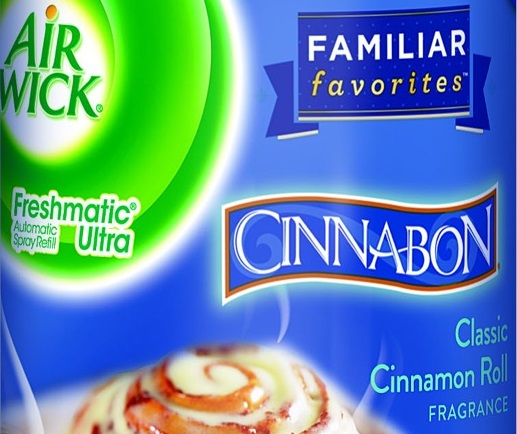
What if I told you Business 1 is Cinnabon, product X is the Cinnabon roll and now product Y and Z are Cinnabon air freshener and Cinnabon Vodka.
In one of my most popular blog posts, I wrote about offering variety; it is better to create original products than more flavors of one. Cinnabon has done just that by creating new products rather than creating different flavored Cinnabon rolls.
I tip my hat to Cinnabon. Kat Cole knows what she’s doing. However, I’m still upset that I can’t order orange juice with my Cinnabon anymore. I guess I’ll survive.
Stay Positive & There’s More To Variety Than Just Flavor
Photo credit

If you want to know how much bubble gum is spit out on the planet, you can Google it. If you want to know about all of Oscar Wilde’s affairs or Houdini’s tricks, you can Google them.
I argue the ease of finding an answer on the digital devices we carry everywhere with us has not lead to an increase in knowledge. After all, you’re more prone to forget something you Googled early in the morning than you are to forget something you read in the newspaper that morning (so long as they were unrelated).
The real question of what’s important to know doesn’t have a Googleable answer. The fact is, if we can get the answer to nearly any question in .6983 seconds, do we really need to know anything?
I’m not going the direction you think I am with this post. Obviously there’s a lot of fundamental knowledge that’s necessary to know for daily tasks and unpredictable events. This knowledge is called common sense. Common sense isn’t important to know, it’s important to survive – a key distinction.
Nor are historical facts, trivia answers or the square root of 64 important to know. What’s important to know is people. Particularly, the people who are in your area (both vocational and geographical location). In this connection economy, your status is dependent on the number of positive connections you have. How do you get those positive connections? It’s not about knowing a little about a lot, it’s about knowing a lot about the people in your area.
Think of all the people who you see regularly but can’t spark a conversation with because you don’t know what to say. Or the people you run into and are forced to greet, but then can’t carry on with small talk. (The worst is when you’re walking in the same direction as the person and you’re both silent. It’s awkward. I write from experience.)
It’s a natural reaction of people to not want to connect with you if you don’t know much about them. The most vital LinkedIn connections are made when those looking to make a connection change the text of the standard connection request, making it personal. “Hey, I want to connect with you because I see that you…and I hold that same work value.” Job offers are readily made when candidates can relate to the employer. Donors largely donate to those they feel have been in a similar situation.
Marlowe, a sophomore at the University of Wisconsin requested that I connect with her on LinkedIn. She used the standard prompt. I declined. Then by chance, we saw each other on campus while I was on my way to work. Instead of putting ear buds in and walking away, she greeted me and picked up conversation. Needless to say, I’ve gone back and accepted her request.
Just the other day while walking to work, I happened to cross paths with Jack Craver, journalist for The Cap Times. I knew enough about him to pick up a conversation right away and set an impression. Needless to say, we’ll be connecting more often.
The possible connections you can make day-to-day are much more likely to happen than the number of times you’ll be quizzed on trivial facts. Perhaps try to learn more about those around you and make those connections. No quiz-bowl trophy can compare to making a connection that rewards you with a job, a pair of free tickets or a friend. Trust me.
Stay Positive & It All Starts With A Hello
Photo credit
Shout out to Ellie, Maureen, Breann, Michelle, KP, Yehuda, Krista, John, and so many others both in and out of Madison, Wis. for all the connections you’ve helped me make.