Manage Twitter To Manage Success

If you don’t manage your money, it will manage you. If you don’t manage your time, it will manage you. If you don’t manage your to-do list, it will manage you. If you don’t manage your social media, it will manage you.

Social media is not used to get popular, known, or for a start-up – despite thousands of people’s efforts. Social media, like Twitter, is used as a link to the rest of the world AFTER you begin to attain a degree of success.

Yes, Twitter and other social media tools work best when they are set up and prepared for people to find, but too many people devote too much time to it. People use social media like a machine gun with unlimited ammo when it really works best to load up and let your followers pull the trigger.

2% of your energy is more than enough to devote to Twitter and other social media each day to keep connections. Keep, not make.

You want people to find you. If you spend 98% of your time finding other people, 1 in 200 will actually want your service. What happens when you put that 98% toward your self-employment? People start pulling triggers.


Stay Positive and Stockpile

Garth E. Beyer


Despite What They Say

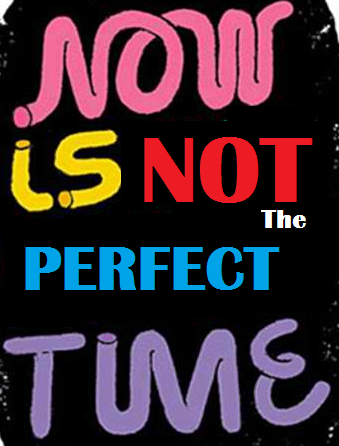
Now is NOT the best time to become a Financial Adviser.

I have always loved hearing “Now is the greatest time to be doing *insert any career here.*” Simply because, if you believe it’s the greatest time, then it is. If you go into something thinking it will be easy, chances are it will be…hard. BUT, it will be much easier than if you go into something thinking it will be hard.

Zig always said, Positive thinking won’t let you do anything, But it will let you do everything better than negative thinking will.

Lately the biggest reference is that Now is the greatest time to start a business in this down economy. I however, have been mentally fixed on an echo of “Now is the greatest time to become a Financial Adviser!” Why? Simply because of World Financial Group/Transamerica Financial Advisers which I mention in my post The First Hand Fails: This Is How The Second Hand Succeeds In Sales

It wasn’t until the second time that I watched and listened to WFG/Transamerica’s introduction-presentation that I noticed a flaw. The flaw was in their backing of their statement, “Now is the perfect time to become a financial adviser, there has not been a more perfect time.” They began their backup of the statement by introducing a timeline of the baby boomer generation, first explaining how when the baby boomers began popping that the baby food business rocketed, then the car dealership business sky scraped when all the baby boomers started to turn 16, then real estate shot straight up when they wanted to buy their houses, and now they are saying that financial advising is going to explode because all the baby boomers are turning 65+ and need to have advisers to make sure their money lasts them until their deathbed.

Do you see the flaw? I could not stop thinking how slow minded WFG/Transamerica was in their sales presentation to not catch both their worst and biggest selling point. If you are reading this, then you know that very few baby boomers are going to seek financial advice this late in life. They have gone their entire lives without it, earned and worked hard and will not spend money to have someone else tell them how they should manage their money. With that, baby boomers are the most stubborn people on the planet . Not to mention, the baby boomers will be dyeing off soon, so how does a dead persons money get to you as a financial adviser? It doesn’t. This was one of the biggest mistakes of WFG/Transamerica.

The second biggest mistake was that they used the wrong example to really persuade people to take up a Financial Adviser career. Give me a shot, and if I don’t have you agreeing with me in just a few sentences, tell me so.

Maybe you have read that the baby boomers will be  inheriting over 11 trillion dollars over the next 20 or so years, by the time they have this money they will either definitely not want advising on it, they are going to live out their last days in glory or they won’t end up getting what they expected with the lack of funds for pensions, the failing of social security, the fact they will work until “the day they drop”, etc, the list goes on, or the last option, they will be dead by the time they receive the extra money. Which leads me to my next reasoning.

In the world of financial advising, baby boomers are a lost cause, but not my generation (Y) and the generation after (Z). They are not. They are the hot button of financial advising. We are looking at two generations of poorly money management educated groups of young adults. Plus, you take the 11 trillion dollars baby boomers are getting and roll it over the second exchange of wealth to generation Y and Z and now you will have over 22 trillion dollars being handed down.

Even more so, my generation and generation Z are scared out of our freaking minds that the economy is going to blow up and become the next great disaster – the great depression’s depression. It is in that idea (fear) that Financial Advising will be the most prominent and income enriching career in the next 5 to 15 years. For once in time, Financial Advising will be looked on as a necessity and will receive the spotlight for its educating purposes. Financial Advisers will be able to teach those who will be handling the 22+ trillion dollars how to manage it for the next 50+ years instead of teaching 65 year old’s how to manage it for 5 years.

And I will end with, So what if teaching the youth how to manage money only earns Financial Advisers a large income for 5-10 years until money management becomes a part of the learning process in school and at home? With the average rate of people only staying at their jobs for 5 years before getting a new job, I see it as a perfect way to make big $$$ in a short period of time, teach the next generations money management so the world can prosper, and move to the next career path you want to try!

Final breakdown,

  • Now is NOT the best time to be a Financial Adviser
  • In 5-15 years will be the BEST time to be a Financial Adviser which includes being a teacher, a world changer, an economy improver, and all the other hats you get to wear
  • In a world that is set on fast pace, Financial Advising will make you money quick and allow you to move on to other things that you may really be passionate about.


Stay Positive and Do What YOU Think Is Best, Not What Someone Else Thinks Because It Will Always Be The Perfect Time

Garth E. Beyer


It’s Better To Love and Not Know It

It’s a terrible tragedy when you realize that you love something. So don’t. (This excludes people).

Excludes people? Yea, when you recognize that you love something, you doubt you deserve it and begin searching for its faults.

Maybe that is why you loved your job at first and then you began liking it less and less. Onto the next one,

you find the learning experience of a new job amazing. I sure do, I am sure we all do, it’s in our nature. We love learning new things, love challenges, love accomplishments and that is exactly what new jobs offer. THEN we reach the level of “love”. This level is right around the point that we know enough to rock out a day at work, but we still don’t know enough to not ask any questions. But this bliss is momentary because it is at this time when we realize that we love our jobs.

Something begins badgering our brains and tugging our hearts. I call it “doubt”, doubt that you deserve what you are getting. Doubt that you deserve to love your job. Why we immediately begin doubting why we deserve something so great? I do not know. I do know that when we begin to doubt, we look for our/the jobs faults.

We begin to nitpick and find anything to use as a reason to not love our job. And from there, it is all downhill. When we get in the mindset of looking for faults and surrounding ourselves with negativity, the only way is down.

And until we can truly accept that we deserve the best and we deserve to love our jobs, we are all better off making sure that we do not realize that we love our job in the first place.


Stay Positive and Ignorant, For It Is Bliss

Garth E. Beyer


S.A.D Your Darkest Cloud #TM

5 minutes and 33 seconds – the length of my 2nd Toastmasters speech titled S.A.D Your Darkest Cloud

“I liked your creative conclusion and 3 point organization. The organization made it easy to follow and you referenced it frequently”

“>Like the blend between facts and ideas > engaging > at times you didn’t seem too sure of yourself which halted your flow (mostly at beginning) > good hand gestures, eye contact, but your legs were static”

“Good job on giving the background of the 2nd study – slow down a bit when reading the studies and during the rest of the speech. Great ending! – Loved the ‘Life Weights…’ – Great job w/ speaking clearly and in an audible tone”

“The speech was delivered well and i will probably remember a lot of what you talked [about]”

“Great job! Well laid out topics w/ great summary, using personal experience really helped people relate. Good suggestions for how to get out of the depression!”

“Great control of time and speed! i really enjoy you speak. I think you can be even greater if you don’t use notes”

“Very good speech. I love the humor at the end of your conclusion. Very timely as well.”

“Great topic. The bad weather in winter season makes many people feel worse. it is good to avoid this feeling by talk[ing] with others.

“Garth> Fantastic. I actually have seasonal depression & working out and being with others, I have found, is key to ridding negative thoughts & gaining a clear head. You spoke very well & had great energy which made it a pleasure to listen to you.”

“Feels comfortable in front of an audience. I thought the topic was important to the audience. I liked the way you ended with the statistic you mentioned at the beginning”

Thank you to the audience members who read this for their feedback. I greatly appreciate all feedback: The glamored, the guts and the grime. Now it’s time for public speaking tips.

Lessons On Speech Prep and Present

Originally my speech was not 5 minutes and 33 seconds. After I wrote it out and timed it, it was 11 minutes and 49 seconds.

Lesson 1: Time your speech at different intervals as you write it. It will prevent you from writing too much and pressure you to amp up the content and let the fluff fly away.

While I was writing essays growing up, my mom would always tell me to always write extra because it is a lot easier to take out then to put in. While this may be true for essays, it is not for speeches under 7 minutes.

Lesson 2: If you end up with a 4 page speech when it should be no more than 1 1/2 pages, scrap it. Pull your main points out and use them for an outline and reference your 4 page speech when you get stuck. It is best to use it only when you get stuck because when you try to use a lot of your longer prepared speech, you will feel like the points wont be as powerful without all the fluff around them. Trust me. I used 2 days trying to take pieces out of my speech to shorten it when I should have started over after I found out it was nearly 12 minutes long.

Once my speech was set and in between the 5-7 minute restriction I thought I would try a new memorization strategy. I recorded myself giving the speech on my computer and uploaded the file to my iPod. I will tell you now, it is very uncomfortable when you listen to yourself give your speech for the first few times. But then I learned two lessons from it.

Lesson 3: Once you get over laughing at yourself as you listen to yourself giving the speech, you begin to notice the details. You notice when you take a breath, you notice the points of poor vocal variety, you notice the areas in which you really seem passionate and the areas in which you sound boring. By becoming an attuned audience member, you can become the tuned in speaker everyone wants to hear.

While originally this was not my point for recording my speech, this strategy greatly increased my presentation abilities. I won more than half of my audience’s appeal to having listened so intensely to myself speak over and over and over. But the real reason I recorded myself was that I wanted to memorize.

Lesson 4: Increase your memorization speed by listening to yourself give your speech. You will begin to mouth out the words as if it were a song.

Unfortunately, this technique did not work as well as I expected it to for me. However, I would still suggest it because the extra bit of memorization could be vital to your actual presentation. If you have or end up trying this strategy, please share your results! I would love to know if there is a particular way you memorize your speech.

…and then it was speech time.

Lesson 5: Next time you give a speech, ask a few audience members (or if you are in Toastmasters, ask the club members) if they will observe how you handle your struggles. When speakers fail to know every single idea, thought, feeling and movement of their speech they tend to, like me, find a way to push their ideas out or find a way to strive to reach an idea.

During my speech I struggled to remember and connect a few ideas and I used too many hand movements. I felt that if I made the movements as if I were getting an idea across, the idea would follow but it wound up backfiring. Do you know how you handle your struggles?

Lesson 6: Do not focus only on hand and facial gestures.

Audience members respond to whole body movement as well, as you read in my club’s feedback, my legs remained static during this speech. Just a reminder.

The Short Version

As you know, my original speech was almost 12 minutes long. I know that work did not go to waste because I truly enjoyed researching for it, writing it and learning from it. For now, enjoy the speech version rather than the “essay version”.

S.A.D. Your Darkest Cloud

There’s something I hate. Really do hate, and as you know I’m a very optimistic person, so it’s a huge deal that I’m starting with the fact I hate something. Now what I hate is a mood disorder and almost everyone gets it, whether it’s barely noticeable or you end up taking a trip to the doctor. Even with my positive attitude, I get it. I get SAD. Seasonal affective disorder, better known as winter depression or winter blues.

The symptoms can be so disastrous that all the positive energy and self improvement you created and invested in yourself throughout the last year could flash away in less than a week.

You find yourself unhappy with all of your achievements, in fact, you don’t even call them achievements, achievement is a sign you’re going somewhere. But you’re not; at least this is what the emotional disorder will tell you.

Now, can you believe 6.1% of the population suffers from seasonal affective disorder at a degree that they should ask for help? It’s such a small percentage but 6.1% of the US population is nearly 19million people.

All of this research began from the fact that every year, I’m in this 6.1% when the season starts to change to winter. After more than 9 years of trial and error I came up with 3 ways to, not only tackle seasonal depression, but these 3 ways can be used to leverage yourself in your success journey. The three topics I am going to talk about are exercise, the personal link, and the passion experiment.

_____________________________________________________________________________

Now, do you have a coworker or friend that works out every day? I am going to bet that they are the ones with the most energy in the office, the ones that get things done and always have a smile on their face while doing so. I am finding it incredible the correlation that exercise has on our feelings and emotions throughout the day.

Let me share a study with you, researchers compared the effects of 30 minutes of walking on a treadmill with 30 minutes of quiet rest in 40 adults recently diagnosed with depression. None of the participants were taking antidepressants or exercising regularly.

The results showed that both groups reported reductions in feelings like tension, anger, depression, and fatigue. But only the exercise group reported feeling good, as measured by improved scores on “vigor” and “well-being” indicators.

And that is what we really want isn’t it? We don’t want to not feel bad, we want to feel goooood.

Even more so, I found another article where scientists have experimented with rodents and know that running induces the production of new neurons in rodent brains, BUT Elizabeth Gould and colleagues at Princeton University report that this benefit is wiped out when animals are housed individually, a situation she likens to “solitary confinement” for humans.

Which brings me to my next factor of fighting back depression, human connections.

_____________________________________________________________________________

I can go on about the negative consequences to social isolation, but that is not going to motivate you to make personal connections when you are feeling down. What will, is talking about an out of the box benefit. While most read that social connections promote outcomes of better health, longevity, and greater quality of life — I have concluded an even better benefit. Social interaction can spring you forward to your life’s goals.

When talking to others, you have to form all your ideas into sentences to form a complete idea. Why do you think were told to practice our speeches out loud? By talking to people you have to put it in words and simplify it to where it’s understandable and the result is achievable. When you talk with people, every word is a brick to the path of the ideas manifestation.

Furthermore, with this social interaction, you will simply forget about depressive thoughts.

Can you recall the last time you were so focused on something that time just flew by? Maybe you were on a phone with a friend and didn’t realize it had even started to rain outside or a personal example, I was talking to a friend on the bus about my eBook and we both forgot to pull the cord and missed our bus stop. We get involved with talking to others about life, and goals, and achievements that we forget the negativity, the downs, the SAD emotions.

_____________________________________________________________________________

Now the state of connecting with people leads me to my next point, life is like a giant game of connect the dots. You know people; those people know other people or have information that can help you get what you want and live your passion.

And acting on your passion is my last point because the action of going after what you want can decrease your depression symptoms. Why? Because you have a focus. It’s similar to what I mentioned with personal connections, you get so caught acting on your passion that all the emotions and negative circumstances in your life disappear.

To be honest, seasonal depression helped me figure out what I was absolutely most passion about, and just as I have over 250 life goals written down, I have the same number of passions, but having the depression helped me figure out the top thing. Writing. When I sit down and write I forget everything, I forget to eat, I forget to sleep, I have once gone over 6 hours writing without getting up to go to the bathroom. But most importantly, I forgot it was winter, I forgot I was sad, I forgot all the negative situations in my life… they vanished. I want the same for you.

_____________________________________________________________________________

By exercising each day to release the gitty-up chemicals in your brain, by making social interaction a priority, and by making your passion an adventure by exploring and sharing your findings,  you can decrease the force of depression, eliminate it permanently, or completely prevent it in the first place.

Before I end this speech, do any of you remember approximately how many people suffer from seasonal affective disorder in the US? (nearly 19mil) Even though this is such a small number compared to the actual number of  people in the US, if these people started to exercise, started to seek out connections, and do what they love can you visualize how HUGE of an impact that would make on the world as a whole?

That is almost 19 million people achieving their goals, feeling motivated, having energy, being happy, inspiring others, connecting with each other, exchanging positive attitudes, spreading love. They say a simple smile is contagious, well you mix all the emotions and actions of the above and you have yourself a freaking epidemic!

BUT, the winter season is filled with dark clouds, both literally and mentally speaking with seasonal affective disorder being the darkest cloud. We know that it’s the time that everyone is at the highest risk of depression, so remember when you lift weights, lift ideas with people and lift your passion, you are also lifting your darkest cloud.

_____________________________________________________________________________

Stay Positive and Lifting

Garth E. Beyer

The Tipping Point

The world has always been right – little things can make a big difference. But it wasn’t until Malcolm Gladwell gave us the book The Tipping Point to teach is HOW little things can make a big difference. (Thank you to my mom for recommending and lending me the book)

I have to say that this is the longest period I have gone without writing a blog, the main reason is that I have been reading The Tipping Point, by Malcolm Gladwell. I’ve also been researching and working on my next Toastmasters speech which you can look forward to later this week. But I would like to say that I finished The Tipping Point today and want to give you a Book Regurgitation post. If you are unfamiliar to this, I take notes whenever I read a book and mark the most important points along with making my own ideas and thoughts based off of what I read. You can click the “Book Regurgitation” category to see a couple of my other posts on books I have read.

What is most exciting is that if you like this post than you can really look forward to my future posts since I have a goal to read 25+ books this year, including all of the books on my book shelf that I have not made time to read. Before you continue, I will give you a heads up that I do not give a clear summary or a critique of the book, if you would like a summary version before you continue you can find it here. Better yet, you have already read the book and are wondering if I have similar thoughts or ideas related to it. Read on and let’s find out. As always, I hope to connect with you, so leave a comment about what you think (and pardon the pun of connect). Actually that’s a great place to start.

I am not a connector. Connectors, being one of the few that usher trends into epidemics of popularity. Or at least, I wasn’t. What I came to find is that I, you, everyone, holds the power to BECOME a connector. You should note that Gladwell never said that connectors were born the way they are, or mavens are raised a particular way to grow up to become a maven. They simply became what was at their core, but that does not mean that someone who is not a connector can’t become one or that someone who is a not a salesman can’t become one or, better yet, someone who is a maven can’t become a salesman too. “…the New Economy is going to lead us to rely more and more on very primitive kinds of social contacts. Relying on the Connectors, Mavens, and Salesmen in our life is the way we deal with the complexity of the modern world.” I say, in addition to entering the social circle of Connectors, Mavens and Salesmen — BECOME a bit of each one. As Gladwell stated, we are currently relying on these connections, and will continue to rely on them more and more as the New Economy progresses. Since I am a person who likes to take care of all the tasks instead of assigning someone else, because I know I can do it better – I had to figure out how to become a Connector, a Maven and a Salesman. I do not want to rely on others to take each role. Here are three steps to become each one of the few.

Becoming A Super-Human Vector Of Popularity

Becoming a Connector

  • Open an excel spreadsheet and start inserting everyone you meet. Every business card you get, every teacher you have, every friend you are introduced to, and so on – put their names, contact info, and a description of how you can connect with them (how you met, how you know them, have a similarity). This is where the rule of 150 does not appear.
  • Remember, its the small things that count. Become a connector by getting out and interacting with people. When you are at the bookstore, observe what books people are reading and if you can make a connection. When you purchase something, use the clerk’s name and have them remember you. It is as much getting people to remember you, as it is remembering them. To become a connector, you have to put in two times the effort.
  • Life Optimizer created a fantastic list of how to become a master connector. The first two bullet points are the two biggest factors that I focus on, Life Optimizer hits everything else. View the 106 tips to Become a Master Connector

Becoming a Maven

  • Having a focus and a passion is only detailing the face value of a Maven. In order to truly become one, you have to become detailed. You have to narrow down your focus into one small subject and then expand on it. It’s like going up a family tree, taking one branch that does not make any other branches, and then making a tree from it.  You need to exploit every thought and idea and put them into your focus. If Mavens were Experts, they would call them that, but an Expert is the foster child to a Maven.
  • Book recommendation, Tribes by Seth Godin. In order to become a Maven, you have to have a following in each of your focuses; a select group of people that are connectors and salesmen.
  • Life Optimizer does it again here, How To Become a Maven (Mr. Know Everything)

Becoming a Salesman

  • Read, Listen, Write, Act. I constantly read books on selling, on success, on business, etc. Then I constantly listen to cd’s related to sales like Brian Tracy, Zig Ziglar, John Maxwell, Jim Rohn, and so many others. Let’s just say I have more sales/motivation audio files than I do music on my iPod. I then write out my thoughts, new ideas, actions, reviews, etc in my blog or in my journal as I read and listen. Lastly, I go back and I act on all of the lessons I taught. No better way to become a better salesman then reading, listening, writing, and acting.
  • Actually there is, failing.
  • Yet again, I have to pull a resource from Seth Godin, check out some lens’ on Salesmanship at Squidoo

Reflections, Reactions and Tips

Other than coming up with ideas of how to become each one of the few, the chapters regarding the Law of The Few was much more stimulating to me. Although, It made me feel slightly dumb that I had not thought of categorizing the types of tippers into three small groups. Too often we believe that there are a thousand factors to a business’s success, when really, its tipping point is a matter of one or two small changes. From here on I am going to expand on the points that I noted while I read the book. I did my best to give you a little taste of everything in the book, my views, and the ability to comment on it.

  • I took the surname test and got a score of approx 41. Which was the average score of the test Gladwell gave to his friends and acquaintances, mostly journalists and professionals. He also gave the test to a group of health educators and academics at conference in Princeton, New Jersey and that group scored an average score of 39. It truly surprised me that I ended up knowing this many people, during the first 10-12 lines of names I scored very little. You can try this exercise yourself without getting the book by clicking the link at the bottom of this post.
  • “Gosh darn it,” Gau said, “if you don’t try, you’ll never succeed.” I noted this because of the tattoo on my back,”If you don’t try, you fail”.  I also love to think that I am similar to Tom Gau in the sense that I create a persuasive conversational dance with everyone I meet. It is for this reason that I feel I would make a great salesman. Despite my actions you can take to become each one of the few, it puzzles me what made Gau a perfect Salesman. What actions, thoughts, behaviors did he express throughout his life that pushed him in this direction. What was the Tipping Point for him in becoming One of The Few?

The next chapter regarded the stickiness factor, which refers to the unique quality that propels the phenomenon to become “stuck” in the minds of the general public and by collateral, influence their behaviors.

  • Gladwell uses the success of the TV shows, Sesame Street and Blues Clues to define all angles of the stickiness factor. It’s clear that a lot of his focus in explaining the factor is related to children and their TV shows. At the end of the book, Gladwell says to “use the thinking in this book to create something new” and I feel that the following will be my research into the stickiness factor. What makes self-development/motivational/inspirational/self-help/ videos sticky for adults? What would the distractor be? What do adults typically focus on? If it could be done on a larger level, having a 30 minutes motivational boot camp TV series, what are the small additions that would need to be to make it stick? Once I acquire more financial freedom, you can bet you will see a post that provides these answers – just as well as you will see me on my 30 minute motivational boot camp TV series each week. Do you have any ideas?
  • All the more interesting, a factor that is used in children’s TV shows would best be applied to the motivational boot camp series — repetition. Gladwell explains that the repetition that Blues Clues uses giving the children a sense of affirmation and self-worth. Two of the most powerfully positive stimulants one could experience. I personally never looked at repetition in this view, thank you Gladwell for bringing me into the light.

Which brings me to one of the biggest points of the book which is summarized in one sentence and not truly expanded on, so if you missed it here it is.

The tipping point is all about selling one idea at a time.

And the greatest part is that if you use the perfect “little things that make a big difference”, you only have to sell a total of a few ideas.

Now, while the Law of the Few and the stickiness factor were simple, straightforward and packed with specific evidence, Gladwell throws you a broad rule of the epidemic called The Power of Context. In these two chapters he establishes the fact that if the trend is not introduced at the right time, it is unlikely that the tipping point will occur.

  • The infinitely positive attitude I have, provided a nice lens when reading about the fact the minor seemingly insignificant quality-of-life crimes were the tipping points for violent crimes in the sense that if people saw broken windows and graffiti-stricken walls and trains, then they feel that they are less likely to get caught or be the one at blame. To make it positive, I saw it as the same for extreme success. It’s created by cleaning up the few negative behaviors you have, it is the smallest things that count. Just a reminder to not focus so much on creating progression of success and focus instead, on eliminating the few actions that are preventing you from reaching your goals.
  • Earlier I said that Gladwell stated that he wanted us to think of how the Tipping Point could apply to a situation in our lives. It keeps on coming up! This morning I was talking with my coworkers about the increase in heroin transactions in Madison, WI. If you have read some earlier posts of mine, you know that I live on the east side (the ghetto side), but you will also know that I found a diamond in the rough apartment complex and are actually a good 5 blocks away from all the bad areas of town. I felt a tad special at work when I brought up Gladwell’s example of the van that carried new needles to exchange with used ones. I will definitely keep some attention at the increase of heroin addicts in the city.
  • The second application of the Tipping Point’s take on the broken window theory happened when I saw someone litter – threw a wrapper out of the window. A smoker – who could have guessed? It was most likely the plastic wrapper that encased his pack of death sentences. The idea that if a town were to put into action a group of weekly garbage pickup volunteers, we would Tip the epidemic in the opposite direction. A perfect example is Earth Day, when thousands upon thousands of people volunteer their time to do street side cleanup. Do you notice that after Earth Day each year, the time it takes for garbage to accumulate takes longer. The more garbage there is, the more likely people will be okay with littering. It is like the rule of 72 in reverse, quickly multiplying the amount of garbage being littered. When you look at areas that have organizations that constantly pick up trash, they steadily have less trash to pick up. As much as I support the idea of prevention over clean-up, it was not until I read the Tipping Point that I understood that clean-up is a form of prevention.

  • As I have hopes to run for President in 2028, I was fascinated on the excerpt study on the fact the people voted more republican because the reporter smiled more when talking about the republican. Aside from the fact (which Gladwell explains further in his book) that people mimic motions of the body and facial movements of the person they are having a conversation with, people take it on an emotional level.
  • I tested the first factor of mimicking expressions a couple ways. The first was that I smiled more when my roommate came home or walked into the room. It was immediately reflected. No wonder they say smiling is contagious, but they forgot to expand it — every facial movement is contagious. In addition to smiling each time she walked in the room, I would also have a puzzled look, a weird look, a sweet luck, a mad look, all of them reflected. I also tested it out while walking up the street on the way home from my bus stop. Another person was walking on the sidewalk coming at me and we both put on a flat, tough, apprehensive looking face. We mimicked the expression of the other person.
  • One of the  most interesting points was when Gladwell took a look at “character” and “the mistake we make in thinking of character as something unified and all-encompassing”. This tendency is termed the Fundamental Attribution Error, which is a “fancy way of saying that when it comes to interpreting other people’s behavior, human beings invariably make the mistake of overestimating the importance of fundamental character traits and underestimating the importance of the situation and context.” A way he goes about explaining this is in a test of cheating on a test. (What an oxymoron).
  • Why this test caught my attention was that I am working on a blog post about the difference between being smart and bullshitting a paper and being dumb and bullshitting a paper. I have had friends get upset that I received an A on a smartly bullshitted paper and have even had them call me a cheater for it. I wont lie, what they called me can be the truth sometimes. I have cheated on school work before — I can recall a time in World Geography class when I wrote the capital of each state on a piece of paper so that I only had to memorize where all the 50 states were and not their capitols. What would my peers say about my character? They would call me a cheater. But that is false. —

—“Character, then, isn’t what we think it is or, rather, what we want it to be. It isn’t a stable, easily identifiable set of closely related traits, and it only seems that way because of a glitch in the way our brains are organized. Character is more like a bundle of habits and tendencies and interests, loosely bound together and dependent, at certain times, on circumstance and context. The reason that most of us seem to have a consistent character is that most of us are really good at controlling our environment. I have a lot of fun at dinner parties. As a result, I throw a lot of dinner parties and my friends see me there an think that I’m fun. But if I couldn’t have lots of dinner parties, if my friends instead tended to see me in lots of different situations over which I had little or no control — like, say, faced with four hostile youths in a  filthy, broken-down subway — they probably wouldn’t think of me as fun anymore”

So yes, I am a cheater in the environment and context of 9th grade world geography class during a test on all the states and capitols. I am not, however, a cheater in environmental science class, or at the workplace or at home. Thus, calling me a cheater falls under the Fundamental Attribution Error.  This is the reason why people can do terrible in school, but miraculous at the work place. It is why people may be dumb as hell, but are the greatest boxers in the world. You would call them neither, poorly educated or workaholics, nor would you say that a person has the brain capacity of a jellyfish or is a fitness expert. They are both, all of the above, and a whole lot of other things too. It is all a matter of context.

  • The second chapter on the law of context explains a 150 personal connection rule. I found it fascinating that a number could be pinned and as social as I am, I found that in each area of my interests, I can’t really connect with more than 150 people on a personal level. The concept also sparked an idea for my public speaking events. I will have networking before the event, but it will be divided into groups of a 125. Instead of having seats lined up in rows and all 2,000 people together, it would be broken up into sections. And since I plan on having two to three day seminars, the people would keep their same seats because they can feel comfortable with their group. If a person is too worried about what the other people around them are thinking about them, they wont be able to pay attention to the lessons I am speaking on. I am not only benefiting myself by breaking up groups into less than 150, but also benefiting the people themselves. In the sense, we are all the same, we cannot connect with more than 150 people in a the same group at once… it can’t reach that point of connection which is important in inspirational public speaking engagements.
  • To continue, the groups I would be speaking to, Gladwell would call the revolutionaries or innovators and early adopters. The ones willing to try it out and test it, to take the risk. These people would receive revolutionary changing ideas from me. The problem that Gladwell expands on is the chasm between the early adopters and the attitude of the early majority – they are incompatible. An idea or invention cannot spread easily between the two, and this is what I fear most. I am currently focused on connecting  with the revolutionaries instead of the early majority. It’s similar to a business plan, a person can have a plan to be successful in business, but they forget to plan their removal of the business equation – give someone else the hard work to do while you reap the profits and start on some new idea.

  • In the two matters of memory – rumors and mental capacity – I found the capacity factor the most interesting. It explains one person in a relationship does not need to maintain certain memories, because their partner will. I thought of my roommate and how much information I purposefully ignore because I know she will remember it, leaving me with more capacity to recall what I really want. A beautiful observation that I was unclear of until I read this book.
  • Something else that caught my attention –but I can’t read my handwriting to indicate the page number it was on– was the act of piggyback riding. It had to do with the AirWalk shoes. They used their marketing to target each upcoming epidemic. Now I want to bring an idea up with you that relates to this. Recently I have been offered a Financial Advising position and am going to turn it down. Despite their persuasions that all of the baby boomers are not turning 65+ and they are in desperate need to receive financial guidance, I disagree. This particular time of need is quickly declining as the baby boomers are soon beginning to die and the fact that they have never had any financial direction, and are very unlikely to take advice even though they need it. I will be turning down the offer in order to prepare for the next epidemic – when the 75+ trillion dollars of money that is being transferred from the elders to their young. It is these people that need the financial guidance and have the time and attention to handle the knowledge. I am going to piggyback ride the epidemic of wealth transfer as a way to promote and succeed in the world of financial advising.

The End of The Tipping Point (Or rather, the beginning of all the Tipping Points)

“She changed the context of her message. She changed the messenger, and she changed the message itself. She focused her efforts. This is the first lesson of the Tipping Point. Starting epidemics requires concentrating resources on a few key areas. “ — “The theory of Tipping points requires, however, that we re-frame the way we think about the world.” — “All of these things are expressions of the peculiarities of the human mind and heart, a refutation of the notion that the way we function and communicate and process information is straightforward and transparent. it is not. it is messy and opaque” — “The Ivory soap 800 number is what I call a Maven trap”

These are brief statements I highlighted, from the conclusion onto the forward of the Tipping Point where Gladwell unleashes himself. The ideas, points, references, case studies that he shares at the end the book are truly remarkable. If you do not want to read the whole book, let this be your cheat – read the conclusion and forward.

Wanting to know if you are a connector? Or want to know about Malcolm Gladwell’s book The Tipping Point and his other writings? You can visit his website here.

The book broken into my reactions –> Hmm, interesting, very interesting, wow, interesting, so true, hmm, seriously? Why didn’t I think of that before, interesting, so true, WOW…… it pretty much goes on from there and repeats. Saying this book is worth a read is an understatement.

Stay Positive and Three Cheers For The Law Of The Few – To the Mavens, Connectors, and Salesmen

Garth E. Beyer

High Existence: A Look At Exercise and Public Speaking

When you become fit, you become fit for public speaking. Due to the plethora of information regarding healthy lifestyles and their correlation with public speaking, along with my personal experience in Parkour and public speaking, I think its due time to make a post about it.

The Analogy You Expected

The way we exercise our bodies is the same for public speaking. In order to have a fit body, we continuously hit the gym, hit the floor, hit the mat, and hit the weights. We all know that we can’t just workout once or twice a week and expect to see positive results. In order to exceed average public speaking skills, we have to give multiple speeches each week, we have to practice our tone, volume, and linguistics. For both, the list of practice methods are endless. The same goes for the results; with consistent training you become a key-note speaker or a certified ass-kicking machine. Just as well, the tips for staying motivated and consistent work for both. Here are the two simplified versions.

  • Position, Plan, Execute – Evaluating yourself and where you stand on the line of success now, is how you can tell if you have made improvement later.Figuring out your position allows you to choose the techniques for the next step, planning. You have to plan out where you want to go, to get there. You cant expect to walk around aimlessly and find the “X” marks the spot treasure chest. By knowing where you are, you figure out where you want to be. In planning how to get there, you will get there, but you need to execute your plan. You have to follow the steps you set for yourself. You do so by following the next tip.
  • Dangling Carrots and Maximizing Achievement – Regardless of your end goal, you wont get there unless you break it down into dozens of small goals with small rewards. For example, if my goal was to cook a meal for the top 10 richest people on the planet and “I” had to make it without the help of anyone else (yes the world can be cruel at times, better to expect hardship and be grateful for any help than to expect help and face the hardship of it not being there), I would make one dish at a time. I know that trying to make everything at once would end up a disaster, so I would break it up into small goals, small meals. In doing so, I am maximizing my achievement by putting 100% of my effort into the one dish instead of 10% of my effort into each dish. The real catch to accomplishing small goals, is the reward. I know the visual is typically a person that wants to lose weight and they are running on a treadmill with a donut hanging in front of them, but I am a health nut so I dangle carrots. Positive rewards to go after. As a result of finishing each dish, I will indulge myself by being the first one to enjoy its delishes-ness. After the first dish, I am ready for the next!

 The Real Connection

Why is it that people fear public speaking more than physical pain?

It does not really matter, but if that is the case, I challenge you to experience positive physical pain: Workout. I guarantee that if you begin to exercise regularly, that your fear of public speaking will dissipate with each physical mark of progression you make. Not only that, but all your public speaking attributes will improve drastically. It is easier to understand the process by examining the connected benefits between working out and public speaking.

  • Exercise releases endorphins which make you happy “the good feel hormones”
  • Increases blood flow getting oxygen to your body, making you less fatigued and providing more mental and physical energy
  • By working out you become more energetic and alert of your surroundings which results in the ability to make audience connections and impromptu comments
  • “Whenever I am running, I am always thinking of things. When you’re running, the oxygen is like the ignition switch to great ideas” – Certified Personal Trainer

What The Sweat And Physical Exertion Boils Down To: A Stunned Audience

“Audiences like speakers who reflect good health and physical vitality. Research has shown that an audi­ence associates a speaker’s well-being with the soundness of his or her verbal messages. So watch your diet and exercise regularly.” – Toastmasters manual on Gestures.

Do you recall learning that your appearance both creates and leaves the biggest impact on your audience. Speakers forget that their first impression is not the first sentence out of their mouths, it is their appearance and the way they walk up to give their speech. Having a fit lifestyle will promote a confident entrance to public speaking. Apart from the words you share, you will enjoy sharing your image, you will enjoy sharing your hard work (exercise) and the results – “Dayumm you look good. A person looking as good as you must have something important to share.”

Fact: The same part of the brain that keeps people from losing weight also keeps people from great wealth! – The Millionaire Mind

“Studies have shown that a mere 7% of the messages that we communicate to others are transmitted by the words we use verbally. Instead, 55% of communication is based on physiology: the way a person stands, whether or not he smiles, degree of eye contact and so forth. The remaining 38% of communication is in tone of voice. What is said must be consistent with how it is said […] By subconsciously mirroring the physiology of others, a sensory message is sent to the brain, creating a similar emotional state. Therefore, health and fitness professionals who love their work, company, and clients and exhibit the body language that corresponds with these emotions positively affect the people around them. Because all sales decisions are ultimately made on emotion, having this effect on people can open the door to initiating the relationships that a successful career is built on.” – NASM Essentials of Personal Fitness Training

I would be doing this post an undeserving torture if I stopped here.

Richard Branson is the 4th richest citizen of the United Kingdom and 254th richest person in the world, according to the Forbes 2011 list of billionaires, so his words cannot be taken lightly. Especially when he was asked what the quickest way to success was… He answered with one word “Workout”.     Here are some other quotes by Richard Branson

“There’s an old saying: Look the part, and you’ll get the part. Well, more and more research is showing that people who are leaner and fitter are viewed as being more competent and successful than those who are overweight. And when people view you as competent, they are more likely to pay you what you deserve. Don’t believe me? Consider this: A New York University study found that people packing an extra 40 pounds make 20 percent less than their slimmer colleagues” – Eat This Not That, David Zinczenko

To end this post, I have to add another passion of mine that hopefully you have read my other posts on: Parkour

Ah, Sweet Ol’ Parkour

One of the greatest Parkour founders,Châu Belle, explains it is a “type of freedom” or “kind of expression”; that Parkour is “only a state of mind” rather than a set of actions, and that it is about overcoming and adapting to mental and emotional obstacles as well as physical barriers

You have to master your mind to master Parkour. And what do you need to master in order to master public speaking? That’s correct, your mind.

I would like to add that you not only have to master your mind, but your body – your movements. Just like public speaking, Parkour requires precise movements of the body in succession to mental stimulants. Can you see the correlation with gestures? It is as simple as that.

Just one more reason to try Parkour.

Stay Positive and High In Existence

Garth E. Beyer

Poetry Night 010

I

There is a lighthouse in my head.

It remains altruistic.

Gratitude is billowing about the edges.


My light is hope to others.

Hope in the future.

Putting power in the present.


Navigation is a prospective.

The light emitted is purely a lens.

Hazards become vanquished,

Before the world ends.


II

Tourists flock my mind,

Operating to each and all.

Their voice, my preservation,

“I’m a lighthouse. It’s your call”


A rather functional location,

providing needed external support.

For all of you I am maintained,

You are my resource.


III

Fear not the unconscious rocks of despair,

They are the beacons of a challenge,

Come to me, the light in the air,

Let your thoughts control your resilience.


Stay Positive and In The Range Of My Light

Garth E. Beyer