The Five Stages Within The Diffusion Process

The Diffusion of Innovations, also called the Diffusion Theory, is a theory that strives on the interpretation of how people either adopt or reject new ideas, technology, products, or change in general.

There are five stages within the diffusion process:

  1. Awareness Stage: An individual becomes aware of the existence of an idea but lacks knowledge of what it does, or the benefits of it.
  2. Interest Stage: An individual has a desire to obtain more information on the idea: what is it, what does it do, how will it affect our culture, what are the possibilities of using it?
  3. Evaluation Stage: An individual mentally questions the selfishness that the idea can be used; how will it benefit me? The individual also begins to demonstrate interpersonal communication by requesting feedback on the idea from others.
  4. Trial Stage: If it benefits the individual, then the idea will be tried. It will be a personal experiment, a small sample to be tested in a way that concludes how the individual can benefit most from it.
  5. Adoption Stage: The individual begins to scale the idea and use it consistently. This adoption stage is largely based on continuous satisfaction of the idea.

A similar five stage process in the mental acceptance of an idea is Knowledge, Persuasion, Decision, Implementation, Confirmation encompassing similar definitions to those I have presented.

Pick & Choose

There may be a million reasons for them not to pick you…

but all you need to do is give them one good reason to choose you.

OR

You can put your mind at rest about what one good reason you can give

and just pick yourself.


After all, if you only need to give them one good reason, they don’t deserve you. You have over a million good reasons. Right?


Stay Positive & You Get To Pick The Reasons… And Yourself

Garth E. Beyer

More Than Just A Decision

More Than Just A Decision

Everyday the PR world is filled with decisions, to take on this client or not, to place the ad here or there, to focus more on social media outlets or word of mouth – the decisions are endless.

It’s almost as if you’re the CEO, but what sets you, as a PR Specialist, apart from the CEO is that it is your job to not only make a decision, but to justify it.

It’s no wonder that taking a debate class is so highly suggested for those looking to go into PR. However, debate merely teaches you how to fend for your position, your opinion on a matter. You can debate which decision is better, but that’s not your job.

Your focus is to fend of those who do not support the action you took from the decision you made. Justification in PR is about the action already taken, not the decision to take action.

By the way, there is no guide to it. Sorry.

Practice makes perfect.

Life Is Short

If time flies when you’re having fun and having fun is all you do, life is short.

If you’re a person that is having tragedies in your life and think life is short. You have another thing coming: one longgg life of living with those tragedies.

Which statement do you hear more people respond with “life is short”? I feel that I hear a lot more people say life is short in response to tragedies: A close friend dies from driving drunk, a grandparent falls and gets amnesia, you get heartbroken by the one you loved for years. Those are logical reasons to note that life is short.

Then you have those who use “life is short” as an excuse. An excuse to not do well in school, an excuse to be reckless, to risk their lives without realizing they are risking putting their tragedy on someone else’s mind, as explained in the paragraph above. Though they may not say it aloud, an underlying factor of why people do “stupid” things is that life is short.

And it is. It should be. Life NEEDS to be short. Scroll back up and read the first contention of this post.

There’s a variable that very few realize about time flying when you’re having fun. Think about this for a moment, remember a time that you said “time flies when you have fun” in response to an experience you had. In that experience, was time going fast? Or were you lost in it? It’s more than likely time didn’t even exist during that experience, in your mind, it was going to last forever. It’s not until the experience is over do you state that time flew.

Did it really though? Or is it just a perception. Yes this is getting deep, but bear with me, there’s a point.

You can have two people that live to be 78 years old. One lived every single day having as much positive fun as possible but ended the day with saying how short life is. The other lived every single day, averagely, blindly, safely, and at her deathbed, she had realized how short life is.

Did either have a short life? Yes and no. They both lived to by 78 years old which is a fair amount of years to live, not short at all. But only one person really lived those years. Only one person made the absolute most out of every day, that made time fly, and at the end of each day wished they had more time to continue doing the fun things they did, that thought life is short, when realistically it wasn’t shorter than anyone else’s.

Everyone has the same 24 hours in a day. You can live each day and think that 24 hours is really short or you can go through life and once on your deathbed, wish you would have lived every set of 24 hours more.


Stay Positive & A Short Life Lived Is Better Than A Short Life Lost

Garth E. Beyer

A PR’s Drug: Gossip

You’re a Public Relations Specialist, not a conniving magazine journalist trying to keep ahead of the Kardashians.

You may think this is common sense to leave out any gossip and untrustworthy information in your communication with the public. For most, it is.

While gossip sinks into the white papers and press releases of the low-minded, ill-fitting amateurs, a real PR professional eliminates any possibility of it entering their work and their life.

See, the real gossip problem is not “in” the work, but “around” it.

As a PR Specialist, you are working with a gargantuan amount of information, on clients and their businesses or organizations. Just as well, you are being constantly overloaded with conversations, emotions, behaviors and memos from them and the public. There’s a reason Public Relations is rated one of the top 10 most stressful jobs.

Like nearly any other drug, gossip is a quick reliever of the stress. It allows you to vent, to be subjective, to rant, to release all the stressful emotions you acquire. But at the same time, it defeats your credibility, your clients trust in you, and creates a conflict of interest, rendering business with you unnecessary.

In PR and life, it is your reputation that gossip damages, not anyone else’s.

Why I Interact With Everyone: My Hope

My hope is that you remain discontent with how society defines success;

that you understand some rules are unjust and are meant to be broken;

that you use the broken pieces to build your character;

that you will light the match which ignites the fire in your belly, the warmth of your heart, and what is necessary for passion to turn into something tangible;

that you either walk away or plow over the naysayers;

that you never stop transforming;

that from time to time – the more often the better – you just start and ship something immediately, just do what you need to do right away and feel that special sense of completion;

that you manage to find a way to always keep your head up;

that you would be willing to get arrested for what you do;

that you always try;

that you be you;

that you


Stay Positive & Remember I’m Here For You

Garth E. Beyer

Safeguarding Confidence

Safeguarding Confidence

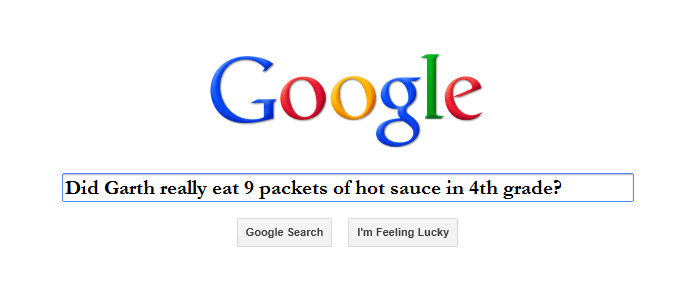
My personal life is like searching something on Google, just without my overconfidence in suggesting what you will finish typing. Regardless of how personal your search or question is, I’ll give you an answer.

Going into PR, thankfully, I learned that I can keep my personal life as open as I want. However, areas of my professional life, of the PR realm, confidential information of clients has to remain seal tight. There are two reasons this was tough to do at first.

1. I believe in communication being the foundation of everything successful, whether it’s good or bad, nothing should stay unsaid.

2. You never know what someone else may be able to help you with or add to what you know if you can’t discuss it.

It did not become so easy to keep confidential matters confidential until I did an interview with Michelle Welsch in which she touches on the concept of protecting the names of everyone who attends her Project Exponential events. She says,

I want to create a space where everyone’s on the same playing field. This anonymity allows people the freedom to step away from their work and whatever preconceived notions or judgements someone might have about what they do for one evening and connect with others in a meaningful way. There are plenty of events that list of the names of attendees. You go, hoping to meet specific people there and may walk way with a few business cards that, if you’re lucky, turn into something remarkable. You may also miss meeting a handful of incredible people who didn’t have the job or the title you wanted to see.”

Michelle made confidentiality a key supporting factor in making her events work so well. It’s a skill, a mind-set even, to be able to leverage confidentiality. Not only does she build trust and credibility at every event when she keeps items confidential, but she creates real connections between people, not connections based on status, prestige, name, income, etc.

As well as in Public Relations, you not only safeguard the confidence people have in you when you keep material confidential, but you enable yourself to discover a new way to leverage something very few people attempt leveraging in the PR world.

Michelle has an event coming up and you’re invited to connect in a different way! You can buy your tickets here